What Do the Symbols on Your Ticket Mean?

Larry Nguyen
Founder of Scratch IQ
Written
Quick answer
The symbols in the play area are the game. Matching them, or uncovering a bonus or multiplier, wins the prize the rules on the ticket describe. The long numbers near the barcode are tracking codes, and none of them reveal whether you won.
You scratch off a star, or a money bag, or a letter that does not seem to match anything. The ticket does not explain itself. Here is what each part is actually for.
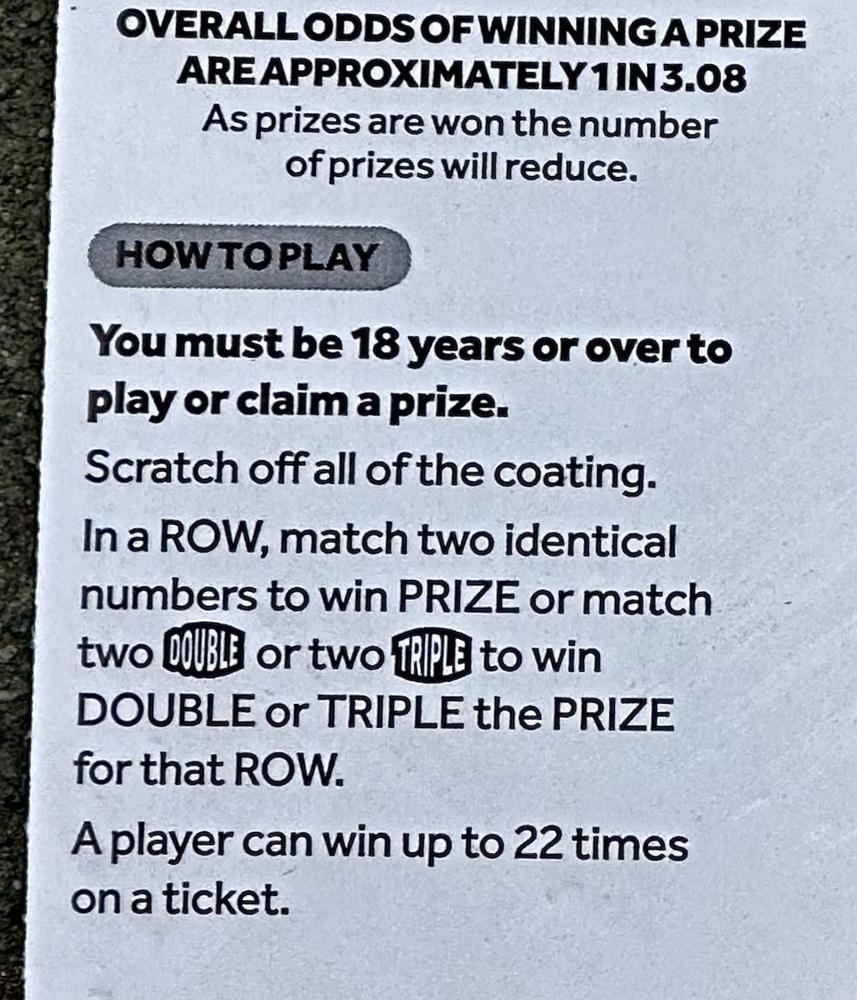
Most of the ticket is not for you
A scratch-off is covered in numbers, letters and symbols, and only some of them are part of the game. The rest are there for the lottery’s own bookkeeping.
Sorting out which is which clears up most of the confusion. It also clears up a fair bit of what gets sold online as a secret, because most of that is someone pointing at an inventory code and calling it a cheat.
The play area
Whatever is under the silver coating is the game. Almost every scratch-off is one of four kinds:
- Match to win. You uncover a set of “winning numbers” and then a grid of “your numbers.” Match one and you win the prize beside it.
- Match three. Uncover symbols in a grid. Three of the same symbol in the right pattern wins the prize for that symbol.
- Crossword. You get a list of letters and a puzzle grid. Scratch every letter you were given wherever it appears, then count how many complete words you finished. The prize depends on the count.
- Bingo. Uncover called numbers, mark them on your cards, and win based on how many complete lines you fill.
The exact rules live on the ticket itself and on your state lottery’s page for that game number. When a game has an unusual twist, that is where it is spelled out.
Bonus symbols, multipliers and stars
Most games add one extra feature, and the names vary by state. A star, a money bag, a lightning bolt, the word BONUS.
They usually do one of two jobs. Either the symbol is an instant win on its own, paying the prize printed beside it, or it is a multiplier that doubles or triples a prize you already won. The ticket says which. If your ticket shows a symbol you cannot find in the rules on the back, look up the game number on your state lottery’s site, where the full rules for that specific game are published.
A multiplier changes what a prize pays, not how likely you are to get one. The multiplier symbols are part of the printed prize structure, counted in the game’s design like everything else.
The numbers that are not part of the game
Near the barcode, or under a separate strip of coating, you will find several longer numbers in small text. These are tracking numbers. They are how the lottery’s computer identifies your specific ticket: which game it belongs to, which print batch it came from, and which ticket it is.
None of them tell you whether the ticket won. The clerk’s terminal scans the ticket, looks the number up in the lottery’s private records, and reads back the answer. The number itself carries no meaning a player can decode. If you have seen videos claiming otherwise, we go through that claim in detail in are scratch-off codes real.
What the front of the ticket tells you
The front carries the top prize in large type and the price. Worth knowing: the top prize printed on the front is the prize the game launched with. It stays printed there whether or not any are left.
As of September 13, 2026, Scratch IQ counts 239 active games that no longer have a single top prize remaining, all still on sale with that number on the front. The back has the overall odds, which are also frozen at the printed value. Neither updates. We cover why in what 1 in 4 odds actually means.
The bottom line
The play area and the bonus symbols are the game. The long numbers near the barcode are inventory tracking and reveal nothing about winning. The top prize and odds on the ticket describe the game at launch, not today.
For what a game holds right now, the remaining prize counts are published by most state lotteries and updated regularly. Florida games are listed on the Florida remaining prizes page, and every other state is on the state list.
Related questions
- What do the small letters on a scratch-off ticket mean?
- In the play area, letters are usually part of the game itself, such as the letters you reveal in a crossword ticket. Small letters and numbers printed near the barcode are tracking numbers used by the lottery's system and do not indicate whether a ticket won.
- What does a bonus star or symbol mean?
- It is usually either an instant win paying the prize shown beside it, or a multiplier that increases a prize you already won. The specific rule is printed on the ticket and on your state lottery's page for that game number.
- Do the numbers on a scratch-off tell you if it is a winner?
No. The long numbers near the barcode are tracking numbers the lottery’s system uses to look up a ticket in its own records. They carry no readable information about the win or loss. See are scratch-off codes real for the full explanation.
- Does a multiplier symbol improve your odds of winning?
- No. A multiplier increases what a winning prize pays, not how often a ticket wins. Multiplier symbols are part of the game's printed prize structure, planned before the game is printed.
Scratch IQ is independent and is not affiliated with, endorsed by, or sponsored by any state lottery commission. This article is informational only — not gambling, financial, or investment advice. Every scratch-off ticket is random; past rankings do not predict individual outcomes.
You must be 18 or older (or your state’s minimum lottery age, whichever is higher) to play. Play responsibly.